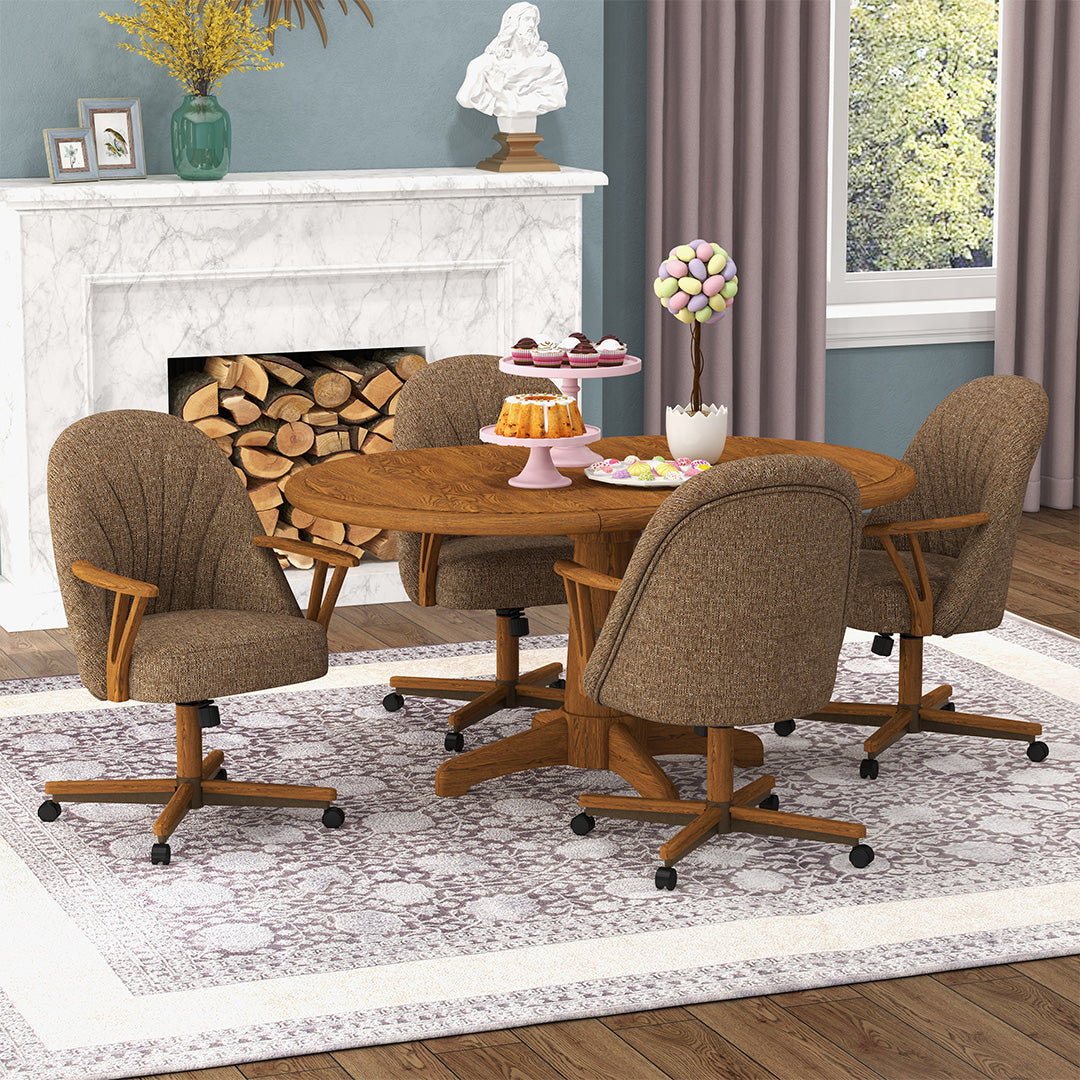




How Do Swivel, Tilt, and Casters Impact Dining Comfort?

Learn how movement features work together as a complete seating system to support everyday dining and relaxation.
Choosing furniture means looking beyond appearances. A beautiful seat might catch your eye immediately, but how it supports you during long conversations matters most. You might find yourself comparing different types of movement and wondering what makes a caster swivel tilt dining chair comfortable for everyday activities. Understanding the mechanics of your furniture helps you make a well-informed decision for your home.

Quick Answer: How Do These Movement Features Affect Dining Comfort?
Swivel, tilt, and casters contribute to dining comfort in different ways. Swivel allows the user to turn while remaining seated, tilt provides controlled backward movement for changing position, and casters help reposition the chair around the table on compatible flooring. These features do not create comfort by themselves; they work together with proper seat dimensions, back support, armrest fit, and cushion construction as part of the complete seating system.
How Do Swivel, Tilt, and Caster Technologies Differ?
Each movement function plays a distinct role in your overall seating experience. They are engineered to solve different practical challenges around the dining table. A chair designed for controlled movement relies on specific mechanical components to function properly.
Swivel Mechanics and Engineering
The swivel function allows the chair to rotate while the user remains seated, reducing the need to reposition the entire chair simply to change direction.
The exact swivel construction varies by chair design and model. What matters to the user is that the mechanism provides controlled, consistent rotation while the base remains properly supported. Always refer to the specifications and construction of the individual chair model when evaluating the swivel system.
This hardware must be built to withstand years of turning. A well-designed swivel mechanism should provide smooth, controlled rotation while maintaining appropriate support through the chair base. This allows the user to turn toward different people or activities without repositioning the entire chair.
Tilt Function and Controlled Movement
Tilt provides controlled backward movement as you naturally lean back. It gives you another way to change your sitting position during longer meals, card games, or work sessions. The engineering behind this involves a tension mechanism housed beneath the seat.
The resistance should feel predictable and supportive. You want the chair to respond smoothly as you shift your weight backward and return easily toward the upright position. Dining chair tilt is intended to provide controlled backward movement within its designed range, rather than the large angle recline associated with a living room recliner.
Casters and Repositioning
Casters are the specialized wheels attached to the base of the chair. Their primary purpose is to assist with everyday repositioning. On compatible flooring, an appropriate caster design may reduce the need to repeatedly lift, slide, or pull the chair when moving toward or away from the table.
The engineering challenge here involves designing a wheel structure that can handle the weight of the user while moving predictably across different surfaces. Caster performance depends heavily on the caster design, the flooring material, floor finish, carpet pile, area rugs, and transitions between flooring surfaces.
Comparing Movement Features
Let us look at a breakdown of how these specific features function. Understanding these distinctions clarifies how they work together for your comfort.
|
Feature |
Primary Function |
Engineering Focus |
Practical Benefit |
|
Swivel |
Allows seated 360° rotation |
Mechanism design for smooth, controlled 360° rotation |
Allows the user to change direction without repositioning the entire chair |
|
Tilt |
Controlled backward movement |
Tension-adjustable tilt mechanism for controlled resistance |
Allows the user to change sitting position while remaining seated |
|
Casters |
Base mobility |
Caster design for compatible flooring surfaces |
Makes everyday repositioning around the table easier without lifting the chair frame |
The Complete Seating System Concept
Comfort should be viewed as a complete seating system rather than a collection of individual features. A comfortable caster swivel tilt dining chair requires proper seat dimensions, supportive back design, arm support, and balanced cushion construction to function properly.
Seat Fit and Dimensions
The physical dimensions must align with the intended user. Seat height affects how comfortably a person can sit at the table and how easily they can place their feet on the floor. Seat depth determines if you can comfortably reach the backrest without the front edge of the seat pressing behind the knees. The usable width between the armrests should allow you to sit comfortably without feeling restricted. Families should also consider the total outside width of the chair and the amount of space available around the table.
Multi-Layer Cushion Support
Initial softness and sustained support are different considerations. Seat cushions can be constructed in different ways to create different comfort and support characteristics. Selected Chromcraft models incorporate a patented multi-layer seat support system that uses complementary foam layers designed to balance welcoming surface comfort with deeper underlying support and resilience during extended sitting. The patented feature relates specifically to the seat-support construction and is not included in every model.
Back Shape and Contact
A supportive back design is about much more than adding extra padding. Seat height, seat depth, back shape, and back angle work together to influence how comfortably the user can maintain contact with both the seat and backrest. You want a shape that allows you to relax naturally while reading, working, or eating. Back shape should be considered together with seat depth. Even a well-designed backrest will not provide useful back contact if the seat is too deep for the user to reach it comfortably.
Armrest Support and Table Clearance
Armrests can provide a comfortable place to rest the forearms. They may also serve as an additional contact point when entering or leaving the chair. Before buying, families should measure armrest height, usable space between the arms, total chair width, and tabletop clearance. The chair must move close enough to the table without the arms contacting the apron, restricting legroom, or preventing comfortable positioning.
As a practical guideline, allow at least 2 inches of vertical clearance between the top of the chair armrest and the lowest edge of the table apron. This allows the chair arms to move comfortably under the table so the chair can be positioned closer to the dining surface.

Supporting Modern Everyday Living
The modern dining room is a flexible gathering space. The activities that take place around the table have expanded, placing new demands on the furniture we use. Homeowners expect their seating to support morning coffee routines, remote work, hobbies, weekend board games, and much more. Because you might remain seated for much longer than a traditional meal, a chair that remains comfortable over time can contribute to a more enjoyable experience.
When comparing a traditional stationary chair with a caster swivel tilt dining chair, consider the movement you prefer. A stationary chair generally remains in a fixed position once placed. This may suit users who prefer a chair that does not move during sitting or standing. By comparison, seating with integrated swivel and tilt provides additional ways to change position. These movement features provide additional opportunities to change sitting position during longer activities.
Chromcraft describes the practical design concept of turning away from the table and repositioning the chair more easily as "Easy In. Easy Out." Depending on the model and intended user, the combination of swivel, controlled tilt, arm support, and caster mobility may make it easier to turn away from the table and reposition the chair. Individual results depend on the intended user, flooring, room layout, and specific chair setup.
Evaluating Flooring Compatibility
Mobility features are highly dependent on your room environment. You must verify caster and flooring compatibility. Different caster designs perform differently depending on the flooring surface.
If you have hardwood floors, laminate, tile, or stone, you need to check the chair manufacturer recommendations regarding smooth rolling movement and protection. For those with area rugs, performance varies by rug thickness, pile, edge design, backing, and caster type. Thin, firmly secured, low-pile rugs may work better than thick or loose rugs. You should confirm compatibility, test the chair on the intended surface, and review both the chair and flooring manufacturer care recommendations before making a final choice.
Maintenance and Long-Term Comfort
Comfort should not be evaluated only when a chair is new. Long-term comfort depends on maintaining the complete seating system. A fixed dining chair requires periodic inspection of joints, fasteners, glides, upholstery, and cushioning. A caster swivel tilt dining chair requires the same general care, plus periodic inspection of casters, swivel components, tilt mechanisms, and fasteners.
Over time, hardware may loosen, upholstery may wear, cushioning may change, and moving components may require inspection or service. Customers should follow the manufacturer assembly, care, and maintenance guidance for the specific model. Reviewing construction quality, warranty coverage, replacement part availability, and maintenance guidance can provide a better understanding of the factors that may influence the chair's performance over time.
Frequently Asked Questions
Q: What is the difference between swivel and tilt?
A: While often grouped together, these two mechanisms serve separate purposes. A swivel mechanism lets you rotate your body to face different directions without having to shift the chair's base. On the other hand, a tilt mechanism offers controlled backward resistance, giving you the freedom to naturally adjust your posture. Both features add flexibility, but true comfort requires them to work alongside proper seat dimensions and cushioning.
Q: How do casters affect dining chair comfort?
A: Wheels on the base of a chair do not change the actual softness of the cushion. Instead, they enhance the usability of the seat by allowing easier movement across compatible floors. This may make everyday repositioning around the table more convenient on compatible flooring.
Q: Can rolling dining chairs be used on area rugs?
A: It depends heavily on the specific characteristics of your rug and the chair's wheels. Low-pile carpets that are firmly secured to the floor typically allow for smoother movement compared to thick, plush, or loose rugs. Always check the flooring and chair manufacturers' guidelines to ensure the caster design is compatible with your floor covering.
Q: How should a family test a dining chair before buying it?
A: The person who will use the seat most frequently should evaluate it in person. Take time to see whether the seat height and depth feel appropriate and whether the backrest provides supportive contact. You should also try the swivel movement and gently lean back to experience the controlled tilt.
On Chromcraft Caster Swivel Tilt Dining Chairs, use the tension adjustment knob to adjust the tilt resistance to your preference. If evaluating caster movement, test the chair on a flooring surface similar to the one in your dining space whenever possible.
Q: How much clearance is needed between the arms and the dining table?
A: As a practical guideline, allow at least 2 inches of vertical clearance between the top of the chair armrest and the lowest edge of the table apron. This helps the chair arms move comfortably under the table and allows the chair to be positioned closer to the dining surface. Always compare the actual armrest height with the table-apron height before purchasing.
Q: What is Chromcraft's patented multi-layer seat support system?
A: Selected Chromcraft models incorporate a patented multi-layer seat support system. Instead of relying on one uniform foam layer, the construction uses multiple foam layers with complementary support characteristics designed to balance welcoming surface comfort with deeper underlying support and resilience during extended sitting. The patented feature relates specifically to the seat-support construction and is not included in every model.
Q: What weight capacity should be considered?
A: Every chair model is engineered for a specific weight limit. You should always verify the manufacturer's stated capacity to ensure it is suitable for the intended user. This specification, along with proper assembly and routine maintenance, plays a critical role in the chair's long-term performance.
Q: Are swivel dining chairs better than fixed dining chairs?
A: One style is not inherently superior to the other; it comes down to how your household utilizes the dining area. A traditional, fixed chair is generally ideal for those who want a completely stationary seating experience. On the other hand, a caster swivel tilt model introduces controlled movement, which may benefit individuals who value the ability to turn, lean, and reposition with greater ease.
Final Thoughts
A comfortable dining space requires careful thought about how you actually use your furniture. A comfortable dining space begins with considering how you actually use your furniture. When choosing a chair, consider how its dimensions, cushion construction, back design, arm support, and movement features fit the intended user and dining environment.
With roots dating back to 1908 and the Chromcraft furniture brand established in 1937, Chromcraft has a long history in American furniture manufacturing and seating innovation. As America’s Original Caster Swivel Tilt Dining Chair Innovator, Chromcraft has helped shape a distinctive category of dining seating designed around comfort, controlled movement, and everyday living.
Chromcraft was recently featured in Reader’s Digest, highlighting the company’s history, Caster Swivel Tilt Dining Chairs, and long-standing focus on everyday comfort.
—
Ready to Compare Dining Chairs?
Explore Chromcraft's Dining Chair Collections to compare dimensions, movement features, upholstery options, and model-specific designs. You can also use our Dealer Locator to experience selected models in person and determine which chair best fits your home and everyday lifestyle.