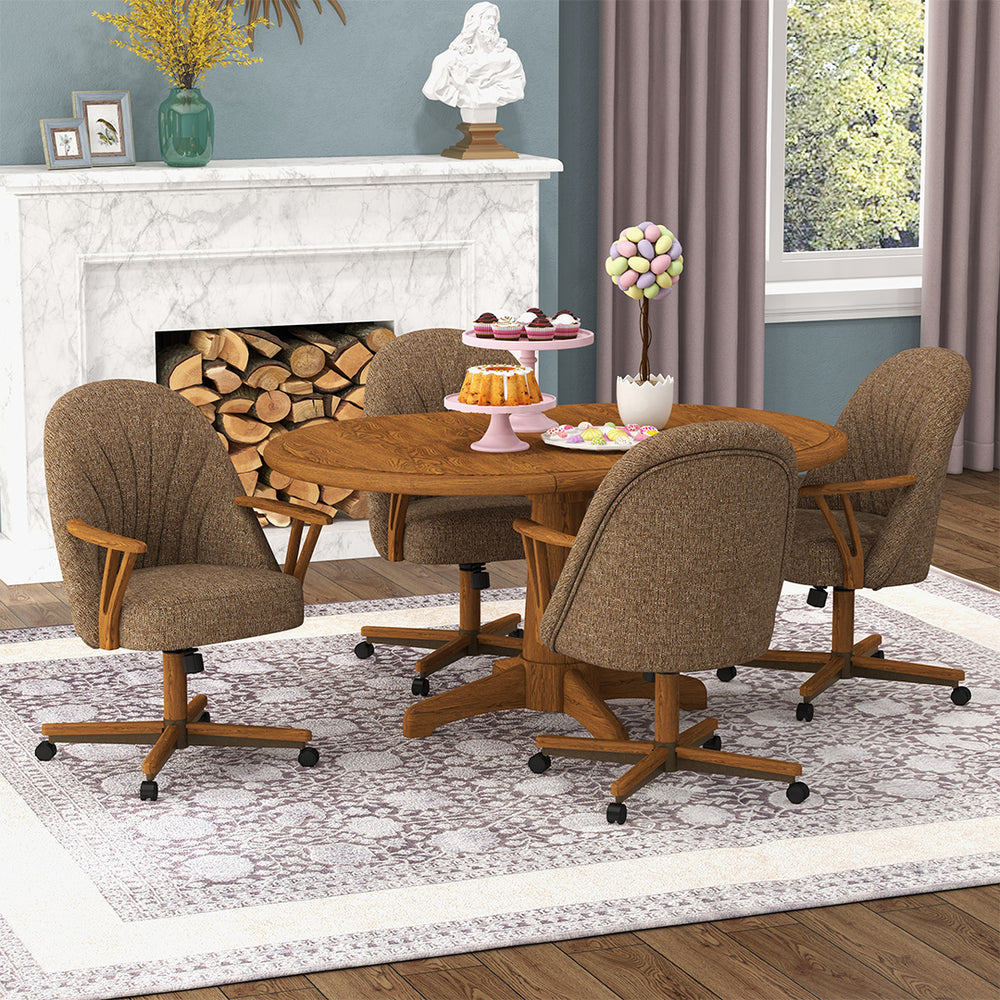




Comfortable Dining Chair Guide for Fall and Holiday Gatherings

A comfortable dining chair for fall and holiday gatherings depends on seat fit, cushioning, swivel and tilt movement, and enough table spacing for long meals.
Fall and holiday gatherings often turn the dining table into the busiest room in the house. Meals stretch into long conversations, card games, coffee, and dessert. Choosing a comfortable dining chair requires more than picking a thick cushion or attractive fabric. A caster swivel tilt dining chair can offer controlled movement, supportive seating, and convenient repositioning, but the best choice still depends on the chair’s dimensions, table, flooring, and the people using it.

Why Dining Chair Comfort Matters During the Holidays
A short weekday meal does not place the same demands on a chair as Thanksgiving dinner or a long evening with visiting relatives. Guests may sit for several hours, change positions, turn to speak with someone, or move away from the table to make room for serving dishes.
Holiday seating also needs to work for different people. A chair that suits a tall adult may feel too deep for a shorter guest. A wide chair may feel comfortable but leave too little room between neighboring seats. Armrests may provide useful support, but they also need enough clearance beneath the table apron.
8 Ways to Choose a Comfortable Dining Chair for Holiday Gatherings
Choosing dining seating for fall and holiday gatherings requires more than comparing styles. The chair should fit the intended user, work with the table and room, and provide comfortable support during meals, conversations, games, and other activities.
The following eight considerations can help shoppers make a more informed choice:
#1 Start With the Person Using the Chair
The most comfortable dining chair should match the intended user, the dining table, and the available room. Comfort depends on how the chair’s dimensions and features work together for the person sitting in it.
Shoppers should review these seven factors before making a purchase:
Seat height and foot position
Seat depth and backrest contact
Usable space between the armrests
Backrest shape and angle
Table height and apron clearance
Available space around the chair
Flooring, rugs, and surface transitions
A chair that suits one guest may feel different to another. The intended user should test the chair whenever possible, especially if it will be used during long meals, conversations, or holiday game nights.

#2 Understand What a Caster Swivel Tilt Dining Chair Does
A caster swivel tilt dining chair combines three movement features that serve different purposes.
The swivel function allows the seated user to turn toward another person, a serving area, or part of the room without repositioning the entire chair. This can be useful when several conversations are happening around a large table.
The tilt function provides controlled backward movement as the user leans back. A dining chair tilt mechanism is different from a living room recliner. It offers a limited range of movement for changing sitting position while remaining at the table.
Casters support controlled mobility across compatible flooring and may reduce the need to lift or drag the chair when repositioning it around the table.
These functions do not create comfort by themselves. They work together with seat fit, cushioning, back support, armrest placement, and table clearance as part of a complete seating system.
Chromcraft describes this combination of controlled turning and repositioning as “Easy In. Easy Out.” Swivel and caster movement can make it easier to position the chair around the dining table without repeatedly lifting or dragging it.
For a closer look at these features, readers can explorehow swivel, tilt, and casters affect dining comfort.
#3 Check the Seat Fit Before the Cushion Feel
A soft cushion may feel pleasant when someone first sits down, but initial softness and sustained support are separate considerations. Seat dimensions have a major effect on how the chair feels during a long meal.
Seat height
The chair should allow the intended user to maintain a comfortable foot and leg position. A seat that is too high or too low for the user may make it harder to maintain a comfortable sitting position.
The seat should also work with the table. If the chair sits too far below the tabletop, the user may lean forward. If it sits too high, the chair may feel crowded beneath the table.
Seat depth
Seat depth measures the distance from the front edge of the cushion to the backrest. A seat that is too deep for the intended user may make it difficult to maintain comfortable contact with the backrest.
A seat that is too shallow may provide less thigh support for a taller user. The ideal depth depends on the person’s body size and the chair’s back design.
Seat width
The usable space between the armrests should allow the user to sit comfortably without feeling restricted. Shoppers should also measure the chair’s outside width, especially when several chairs will sit along one side of a table.
A chair can have supportive cushioning and still feel awkward if the armrests sit too close together or if neighboring chairs leave little room to turn.
#4 Look for Supportive, Model-Specific Cushioning
Selected Chromcraft models incorporate a patented multi-layer seat support system designed to balance welcoming surface comfort, deeper support, and lasting resilience. Instead of relying on a single uniform layer of foam, the system combines complementary support layers to create a more thoughtfully engineered seating experience.
Comfort also comes from how the entire chair works together. Cushioning, seat dimensions, upholstery, and back support all contribute to how a dining chair feels during long meals, conversations, and holiday gatherings.
Because seat construction varies by model, shoppers can review the product details for the specific Chromcraft chair or collection they are considering.

#5 Evaluate Back Support and Armrests
A supportive back design should allow comfortable contact without forcing every user into one rigid sitting position. Backrest height, contour, angle, and seat depth all influence the experience.
Some guests may prefer a more upright position for eating. Others may enjoy a slight backward angle during a conversation after dinner. The right choice depends on the chair, the table, the user, and the activities taking place.
Armrests can provide a comfortable place to rest the forearms and an additional contact point when entering or leaving the chair. Their height and width also affect how closely the chair can sit to the table.
As a practical planning guideline, allow at least 2 inches of vertical clearance between the top of the armrest and the lowest edge of the table apron. This helps the chair arms move beneath the table so the chair can be positioned closer to the dining surface.
#6 Plan Enough Room Around the Table
A comfortable chair needs room to function. Holiday tables often become crowded with extra place settings, serving dishes, decorations, and additional guests, so the room layout deserves attention before the event.
As a practical planning guideline, allow approximately 36 inches from the table edge to nearby walls or furniture where space permits. Additional room may be helpful in high-traffic areas.
Shoppers should also consider:
Side-to-side room for the chair to swivel
Space behind the chair for controlled tilt and repositioning
Clear walkways near doorways and serving areas
The distance between chair arms
The open space between table legs
The size and edge design of area rugs
Flooring transitions between hardwood, tile, and carpet
A pedestal table often leaves more open legroom than a table with thick corner posts. However, the actual chair width and table design remain important. Measurements should come from the specific pieces being paired.
Chair feature |
What to check before buying |
Why it matters during gatherings |
Seat height |
Floor-to-seat measurement and table height |
Helps the user maintain a comfortable position |
Seat depth |
Cushion front edge to backrest |
Affects backrest contact |
Seat width |
Space between the armrests |
Provides room for comfortable sitting |
Armrest height |
Top of armrest compared with table apron |
Allows the chair to move closer to the table |
Swivel movement |
Side clearance around the chair |
Gives guests room to turn |
Tilt movement |
Space behind the backrest |
Allows controlled backward movement |
Casters |
Flooring, rugs, and transitions |
Supports predictable repositioning |
Table base |
Open space between legs or pedestal |
Influences chair placement |
For more detailed planning advice, readers can reviewhow much space swivel tilt dining chairs need.

Harrison Collection CD4242-C4230 | A pedestal table often leaves more open legroom
#7 Match the Chair to Holiday Activities
The right chair should suit the way the household uses the dining area.
For a long dinner, seat height, seat depth, back contact, and cushioning deserve priority. For a game night, usable seat width and the ability to turn toward different players may matter more. For coffee and conversation, swivel and controlled tilt can provide additional ways to change sitting position.
Families should also think about serving patterns. If one person frequently gets up to bring food from the kitchen, clear space around that seat may make the room easier to use. If children move in and out of the table, the layout should leave a clear route around the chairs.
A caster swivel tilt dining chair can support these changing activities through controlled movement, but the surrounding room still needs adequate clearance.
#8 Test the Chair Before a Major Gathering
Online measurements are useful, but an in-person test can provide a better understanding of how well the chair fits the intended user.
During a showroom visit, the user should:
Sit with the back in comfortable contact with the backrest.
Check the seat depth and the space behind the knees.
Confirm that the feet and legs rest comfortably.
Test the swivel by turning toward both sides.
Lean back gently to feel the controlled tilt resistance.
Use the tension-adjustment knob to test the tilt resistance at a setting appropriate for the intended user.
Move the chair on a flooring surface similar to the one at home.
Try the chair near a table with a similar height and apron design.
A short test may not reveal how the chair feels during a three-hour meal. Spending more time in the chair can help the user make a more informed decision.

Frequently Asked Questions
Q: What makes a dining chair comfortable for a long holiday meal?
A: Long-meal comfort depends on the relationship between seat height, seat depth, seat width, cushioning, back support, armrests, and movement. A chair should fit the intended user and allow comfortable contact with the seat and backrest.
Q: Is a caster swivel tilt dining chair suitable for holiday gatherings?
A: A caster swivel tilt dining chair may suit holiday gatherings because it provides controlled ways to turn, lean back, and reposition around the table. The room must still provide enough space for the chair to move, and the flooring should be compatible with the casters.
Q: How much space should be left between the armrest and table apron?
A: A practical guideline is at least 2 inches of vertical clearance between the top of the armrest and the lowest edge of the table apron. The actual chair and table measurements should always be confirmed before purchase.
Q: How can shoppers choose a dining chair for guests of different heights?
A: They should compare seat height, seat depth, and usable seat width. The chair should provide a comfortable foot and leg position for the primary user while maintaining comfortable contact with the backrest.
Q: Does a thicker cushion always provide better holiday comfort?
A: No. Thickness alone does not explain how a cushion will perform during extended sitting. Foam construction, seat dimensions, back support, upholstery, and personal preference also matter.
Q: What should shoppers know about the patented seat-support system?
A: Selected Chromcraft models incorporate a patented multi-layer seat support system. It uses complementary foam layers designed to balance surface comfort, deeper underlying support, and resilience during extended sitting. The feature applies only to selected models.
Q: Can a dining chair tilt like a recliner?
A: A dining chair tilt mechanism provides controlled backward movement within a limited range. It is designed for changing sitting position at the table, not for deep reclining like a living room chair.
Q: How should families prepare the dining room for a movable chair?
A: Families should measure table-apron height, chair width, armrest height, space behind the chair, adjacent seating, table-base clearance, and flooring. A clear route around the table also helps guests move between the dining area and kitchen.
Final Thoughts
Choosing the most comfortable dining chair for fall and holiday gatherings requires a complete view of the seating experience. Seat fit, cushioning, back support, armrest clearance, table dimensions, flooring, and movement all deserve attention.
A caster swivel tilt dining chair can provide controlled movement and supportive seating for meals, conversations, games, and time with family. With roots dating back to 1908, Chromcraft has a long history in American furniture manufacturing and seating engineering. For nearly five decades, the company has specialized in caster swivel tilt dining seating and remains a dedicated specialist in the category.
Before the holiday table is set, shoppers should measure the room, compare the chair with the table, and test the intended model whenever possible. The result is a dining area prepared for comfortable meals, lively conversations, and the gatherings that families remember.
—
Chromcraft Dining Collections and Customer Assistance
To review model-specific features, compare overall dimensions, or evaluate available upholstery options, shoppers can browse Chromcraft’s Dining Chair Collections. If you need assistance finding an authorized retail partner or confirming which display models are available to test in person, please get in touch with Chromcraft directly.