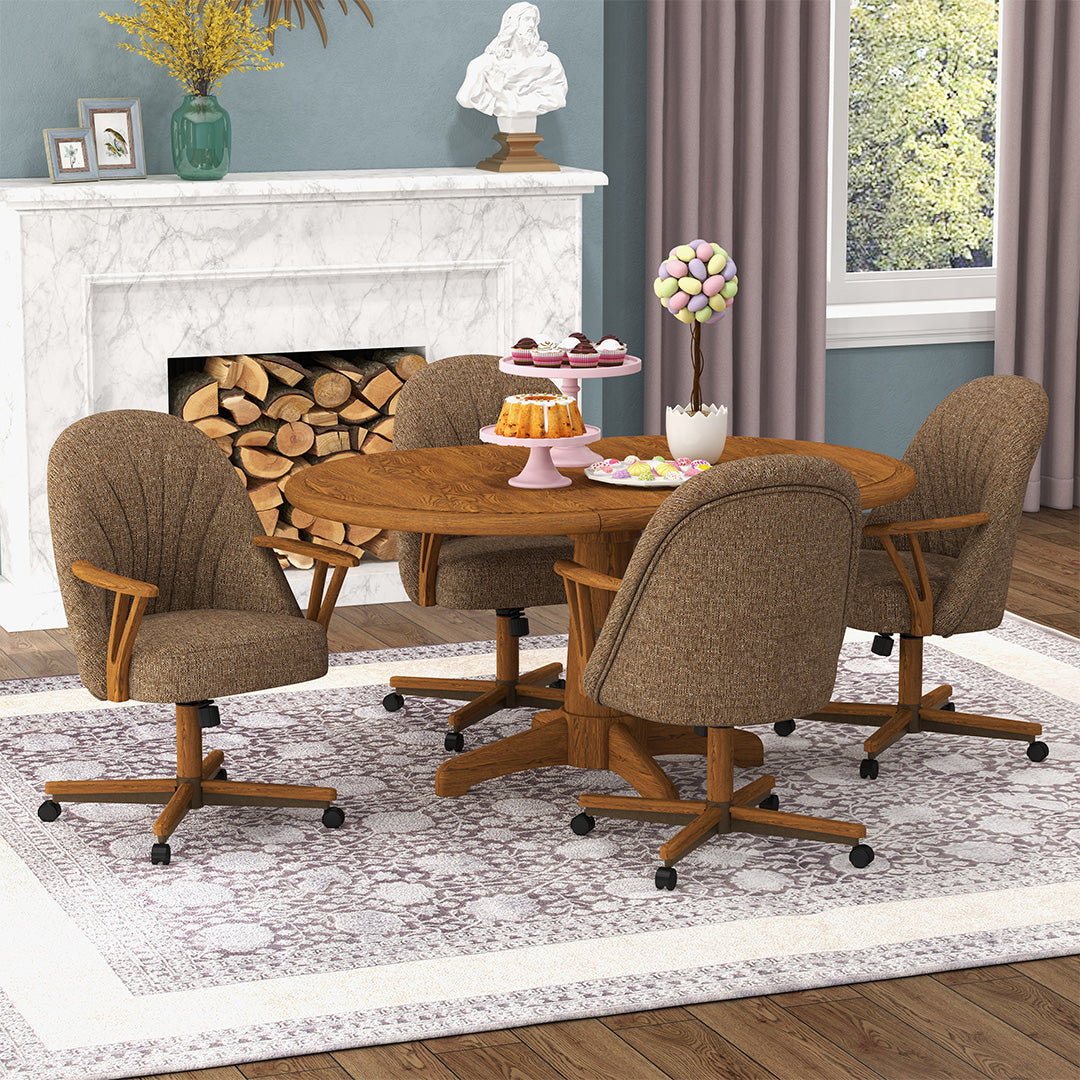




Easy In. Easy Out. Why Movement Matters for Holiday Dining

A practical guide to swivel, tilt, caster mobility, table clearance, and comfortable holiday seating.
Holiday dining rarely follows a neat schedule. A meal can become a long conversation, a serving dish may travel around the table, and guests may shift positions as children, grandparents, and hosts join the same gathering. A caster swivel tilt dining chair gives diners more ways to orient themselves around the table while keeping the focus on the people and moments that make the season meaningful. The right combination of caster mobility, swivel, controlled tilt, seat fit, and table clearance can make a dining room feel more flexible and welcoming.

Enjoy longer conversations during holiday gatherings with Chromcraft Chambers Collection CM362-C798 Dining Chairs
Quick Answer: Why Movement Matters at a Holiday Table
Movement in a dining chair helps the chair follow the way people use the table. A guest may want to turn toward a speaker, move closer to a plate, create space for a passing dish, or angle toward a nearby conversation.
After dessert, the table may host coffee, board games, gift opening, photo sharing, or a family puzzle. Good dining seating should feel settled during a meal and responsive when a person wants to turn, reposition, or move away from the table.
The Three Movement Functions to Understand
Shoppers often see the words swivel, tilt, and casters grouped together. Each feature has a different job, and the combination works best when the seat, back, arms, and table fit receive equal attention.
|
Movement feature |
What it does |
What to check before buying |
|
Casters |
Helps the chair reposition across compatible flooring |
Caster type, floor compatibility, wheel path, and transition areas |
|
Swivel |
Allows the seat to rotate and face a new direction |
Rotation range, table clearance, and armrest relationship |
|
Controlled tilt |
Allows a measured change in back angle as the user leans |
Tilt feel, tension adjustment, and back support |
|
Complete seating system |
Connects movement with comfort and support |
Seat height, depth, width, cushion construction, back shape, and arms |
#1 Casters Support Repositioning
Casters let a dining chair move across the floor with the user. The movement can be forward, backward, or slightly sideways, depending on the base and wheel design. That can help a guest line up with the table, turn toward a nearby person, or make room for a host carrying a platter.
Flooring deserves close attention. Twin-wheel soft casters may suit many common residential surfaces, yet each model and floor has its own requirements. Hardwood, laminate, tile, carpet, finished stone, grout lines, and area rugs can create different rolling experiences. Shoppers should confirm the chair specifications and follow the flooring manufacturer's care recommendations.
#2 Swivel Changes Direction
Swivel allows the seat to rotate while the base stays in place. Around a holiday table, that function can help a guest face the person speaking without turning the entire chair. It can also make it easier to align the chair with the table after a brief change in position.
The chair remains part of the dining arrangement while the seat turns toward the activity.
#3 Controlled Tilt Adds a Small Change in Angle
Controlled tilt allows the chair to move gently backward as the user leans, providing a comfortable change in sitting position during a long meal or conversation. Unlike a recliner, the movement is limited and controlled, keeping the chair appropriate for dining.
The tilt resistance can be adjusted with the tension-adjustment knob, allowing the user to find a comfortable level of movement.
How Easy In. Easy Out. Works in Real Life
Easy In. Easy Out. describes how caster mobility, swivel, and controlled tilt work together around the dining table. Casters help reposition the chair, swivel lets the user turn toward the table or conversation, and controlled tilt allows a comfortable change in sitting position.
During a holiday gathering, these movements happen naturally. A guest can move into position at the table, turn toward the person speaking, adjust position during a long conversation, and reposition the chair when it is time to leave the table.
The result is a dining chair that works with the way people actually gather, dine, and interact around the table.
Table Space and Floor Planning
Holiday seating works best when the room is measured before the chairs arrive. The table's shape, base, apron, nearby walls, rugs, and furniture all affect movement.

Size dimensions of the Chromcraft Carlisle Collection CD324-C498 Dining Table
Measure the Chair in More Than One Position
The listed chair width is only the starting point. A chair with arms may need more space when it rotates, so the household should measure it facing forward, turned slightly, and pulled away from the table. The measurement should include the nearest wall, cabinet, sideboard, or holiday decoration.
Inspect the Table Base and Apron
Table legs can interrupt a caster's path. A pedestal table often gives chairs more flexible legroom, but its shape still matters. Shoppers should compare the chair's fixed seat height and arm height with the underside of the tabletop and check the table-apron space.
Treat Rugs and Transitions as Part of the Design
An area rug can add warmth to a holiday dining room, yet a thick edge or uneven transition can change how a caster moves. If a rug sits under the dining set, the household should confirm compatibility and keep the route between the chair and table clear. Flooring transitions between wood, tile, laminate, and carpet may also change the chair's response.
Match Movement to Holiday Activities
The best movement features are the ones that match the way a household celebrates. A family can use the following guide when planning seating for the season.
|
Holiday moment |
Useful movement consideration |
Why it matters |
|
Guests arrive |
Clear approach and enough room behind the chair |
Gives each person a defined place to get situated |
|
Dinner conversation |
Swivel and comfortable back contact |
Helps the user face people across the table |
|
Passing dishes |
Caster repositioning and table clearance |
Creates space for serving pieces to move around the table |
|
Dessert and coffee |
Seat support and controlled tilt |
Suits a meal that continues after the main course |
|
Family games |
Rotation and flexible positioning |
Helps the chair face the center of the activity |
|
Hosts moving around the room |
A clear caster path |
Keeps the dining area organized during serving and cleanup |
Different holiday activities place different demands on a dining chair. Understanding how caster mobility, swivel, and controlled tilt work can help households choose seating that better fits the way they gather, dine, serve, and spend time around the table.
A Practical Shopping Checklist
Before ordering a movement-friendly dining chair, shoppers should confirm the following details:
- Seat height compared with the table height and apron clearance
- Seat depth and width for the intended user
- Armrest height, width, and clearance beneath the tabletop
- Swivel range and how the chair rotates within the table setting
- Controlled tilt operation and tension adjustment
- Caster construction and compatibility with the household's flooring
- Clear space behind, beside, and beneath the table
- Upholstery options and care instructions
- Model-specific product specifications, warranty details, and availability
Before ordering a caster swivel tilt dining chair, shoppers should review the exact model page. Small changes in seat dimensions, arm design, upholstery, base construction, or caster type can affect how the chair fits a particular table.
Comfort Still Begins With the Seat
Movement is an important part of the dining experience, but lasting comfort also depends on the seat itself. Seat height, width, depth, cushioning, back design, and arm support all contribute to how a chair feels during a long meal or conversation.
Selected Chromcraft models incorporate a patented multi-layer seat support system designed to balance welcoming surface comfort, deeper support, and lasting resilience. Together with proper seat fit, back support, arm support, swivel, controlled tilt, and caster mobility, these elements form Chromcraft’s Comfort Engineering approach.

Back design matters just as much. A backrest should provide comfortable contact, while armrests help define the user's space at the table. These parts should work with the swivel, tilt, and caster base as one seating system.
For more detail on the complete seating system, readers can explore What Makes a Dining Chair Comfortable? Key Features That Matter Most. The guide explains why seat fit, cushioning, back design, arm support, and movement should be evaluated together.
Why Chromcraft Focuses on Movement
With roots dating back to 1908, Chromcraft has a long history in American furniture manufacturing and seating engineering. For nearly five decades, the company has specialized in caster swivel tilt dining seating and remains a dedicated specialist in the category.
That history helps explain the company's focus on the dining chair as a complete piece of furniture for family conversations, long meals, and everyday activities around the table.
Readers can learn more about the brand's seating engineering and heritage in Chromcraft's Century of Seating Innovation Featured in Reader's Digest.
Frequently Asked Questions
Q: What does Easy In. Easy Out. mean for holiday dining?
A: Easy In. Easy Out. describes how caster mobility, swivel, and controlled tilt work together around the dining table. Casters help reposition the chair, swivel allows the user to change direction while seated, and controlled tilt provides a comfortable change in sitting position. Together, these features create a more flexible dining experience for meals, conversations, and family gatherings.
Q: Can a caster swivel tilt dining chair work with a wood dining table?
A: Yes, many can work well with wood tables. The important checks are seat height, armrest clearance, table-apron space, table-base placement, flooring, and the exact dimensions of both pieces.
Q: Do swivel and casters perform the same function?
A: No. Casters help the chair reposition across compatible flooring, while swivel changes the seat's direction. Used together, they can help the user line up with the table or face another diner.
Q: Is controlled tilt the same as a recliner?
A: No. Controlled tilt provides a measured change in seating angle as the user leans. It is dining seating, not a recliner, and the seat height remains fixed unless the product specifications state otherwise.
Q: Are caster dining chairs suitable for hardwood floors?
A: They may be suitable, depending on the caster design, floor finish, and model specifications. Shoppers should confirm recommended surfaces and follow the floor manufacturer's care guidance.
Q: How much space should be left behind a movement-friendly dining chair?
A: There is no single number for every table, chair, and room. The household should measure the chair under the table, in a rotated position, and pulled back, including nearby walls, furniture, rugs, and seasonal decorations.
Q: Should every chair at a holiday table have swivel and caster features?
A: Not necessarily. Seating should match the household's preferences, table layout, and activities. A family may choose movement-friendly chairs for frequently used seats and pair them with stationary chairs elsewhere.
Q: What should shoppers confirm on the product page?
A: They should review seat height, width, depth, arm dimensions, back design, upholstery, caster details, swivel and tilt functions, floor guidance, warranty information, and availability. Chairs within one collection may have different dimensions or construction.
Final Thoughts
Holiday dining asks more from a chair than a quick weekday meal. Guests may sit longer, turn toward different conversations, make room for serving dishes, enjoy dessert and coffee, or stay at the table for games and family time.
That is where caster mobility, swivel, and controlled tilt can make a meaningful difference. When these movement features are combined with proper seat fit, cushioning, back support, arm support, and table clearance, the chair becomes part of a more comfortable and flexible dining experience.
For nearly five decades, Chromcraft has specialized in caster swivel tilt dining seating. Easy In. Easy Out. brings that experience together in a simple idea: a dining chair should move naturally with the way people gather around the table.
—
Current Collections and Customer Assistance
Customers can review Chromcraft's current dining chair collections to compare dimensions, upholstery choices, movement features, and design details. The following resources can help with dealer information, in-person viewing, and warranty coverage: